A clean syringe + needle appropriate for subcutaneous injection.
Alcohol swabs / prep pads to clean vial top and skin.
Sharps disposal container for used needles/syringes.
A clean surface and good lighting.
Storage & handling before you inject
Store the vial in the refrigerator (typically 36–46 °F) until first use.
Do not freeze the medication. Freezing may damage it.
Inspect the vial: the liquid should look correct (clear or as directed), no particles floating or cloudiness (unless it’s specifically allowed) before injecting.
Choosing an injection site & rotating
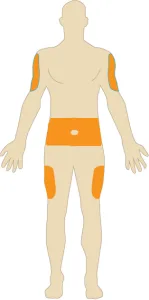
Where you should inject your GLP1s.
Common subcutaneous injection sites are your belly and abdomen (at least 2 inches away from your belly button!), front/outer thighs, and the back of your upper arm (if someone else injects).
Avoid areas with scars, bruises, stretch marks, or irritation.
Rotate your injection site each time you inject to avoid tissue damage, lumps, and poor absorption.
Preparing the syringe and drawing the dose
Wash your hands with soap & water and dry thoroughly. If soap and water are unavailable, hand sanitizer is a good alternative.
Once your hands are dry, use an alcohol swab to clean the injection area. Allow it to fully air dry. Don’t blow on the area to help dry the alcohol. Blowing on it can contaminate the area with germs that live naturally in your mouth.
Then, use the alcohol pad to clean the top of the vial (rubber stopper).
Remove the cap from the syringe, draw air into the syringe equal to your required dose volume, insert the needle into the vial (careful, they’re so small they can bend), push all of the air in the syringe into the vial (this helps with drawing the liquid easily).
Turn the vial upside down and slowly pull back the plunger on the syringe to draw the correct dose. Tap out air bubbles (if any) and adjust to the correct volume.
Make sure you’ve got the correct dose and the needle remains sterile.
Injection technique
With the syringe ready and dose drawn, pinch a bit of skin and insert the needle at approximately 90° to the skin.
Slowly push the plunger all the way down to deliver the full dose. After the dose is fully delivered, gently withdraw the needle.
Do not rub or massage the injection site vigorously — this can affect absorption.
After the injection & disposal
Carefully dispose of the used syringe by putting the cap back on and then throwing away. (If you don’t have the cap, you can put the used needle in a proper sharps container. Do not reuse needles. If you don’t have a sharps container, you can use a sturdy plastic container to put them in. Then, eventually, throw the entire container away.)
Ensure the vial (if not emptied) is stored in a refrigerator.
Troubleshooting & Tips
It’s a good idea to keep a log of your injection dates, dose amounts, and sites used (for rotation). This can help make sure you’re using it weekly and helps you rotate injection spots.
If you notice redness, swelling, pain at the site longer than expected, contact your provider.
If the medication looks discolored or has particles, do not use it — consult your Healthy Living doctor through your portal.
These medications are typically once weekly injections. Make sure to pick a consistent day/time each week (or whatever your provider directs). Your time of the day can range, but it should be the same day each week. A day or two off schedule is ok. Never do 2 injections closer than 2 full days apart.
Always follow the exact dosing, storage, and use instructions given with your specific prescription (especially if compounded).