


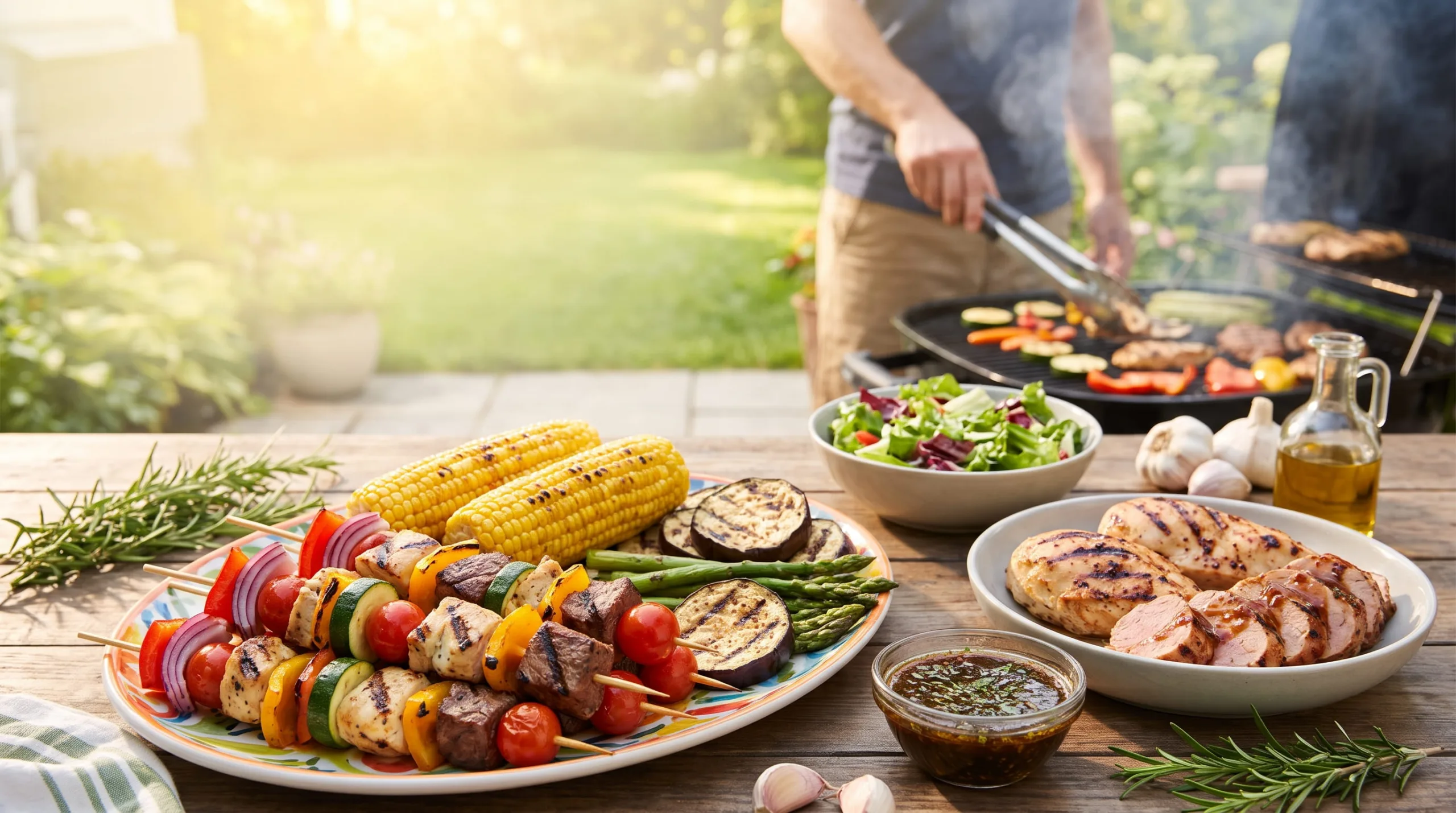
These grilling tips can help you have a healthier cookout. Summer is synonymous with grilling for many American families, and why not? When the weather is warm, we spend more time outdoors and try to stay out of the hot kitchen. It stays light longer, and the evenings tend to seem a little less jam-packed with activities than usual.
These are all great reasons to look to the barbecue for dinner inspiration. But before you dust off that grill, we have some tips to help you enjoy the BBQ season while keeping your dinners as lean and healthy as can be.
Healthy Barbecue Tip No. 1:
Bold ingredients add great flavor to grilling sauces and marinades. You can add bold flavors without adding too many calories or fat grams. Here are some of my favorite ingredients for sauces and marinades:
Healthy Barbecue Tip No. 2:
Have large resealable plastic bag, will marinate! One of the easiest ways to marinate meat, chicken, fish or vegetables is to place them inside a large, resealable plastic bag. Set the bag in a medium sized bowl, then drizzle the marinade over the food. Seal the bag, eliminating any excess air. The food should be surrounded by the marinade. Keep marinating in the refrigerator until you’re ready to grill.
Healthy Barbecue Tip No. 3:
A little sweetness is good, but more is not better. Adding a small amount of a sweet ingredient (like fruit juice, brown sugar, honey or molasses) to the marinade or grilling sauce can be a good thing. It adds flavor and helps to balance other bold spices in the marinade or sauce. But too much sweetness can encourage the meat, fish, or vegetables to burn when they’re grilled over high heat.
Healthy Barbecue Tip No. 4:
Throw some vegetables on the grill. The best part about grilling vegetables is that you don’t have to worry about overcooking them as you do with some types of meat. And vegetables seem to taste better grilled than they do cooked any other way.
Marinating vegetables will help them caramelize better when they’re grilled, and it’s the caramelization that brings the best flavors. Just submerge the vegetables in marinade for about an hour before putting them on the grill. If you don’t have that kind of prep time, just coat the vegetables ever so lightly with a little olive oil or canola oil.
The trick to grilling vegetables is cutting them into shapes and sizes that cook well on the grill. When you cook them over direct medium heat, turning frequently, they’ll usually be done in 8-10 minutes (sometimes less, depending on the vegetable). Look for grill marks and some light browning to develop.
These vegetables work especially well on the grill:
Healthy Barbecue Tip No. 5:
When grilling chicken, take the skin off — take it all off!Half the fat and saturated fat in chicken breast and thigh is in the skin which is why so many of us enjoy our chicken skinless. Consider:
But if you cook your chicken with the skin on, then take it off at the dinner table, you’ll lose all the flavor from your marinade, BBQ sauce, or rubs and seasonings. So go ahead and take the skin off before you prepare the chicken for grilling.
Marinate skinless chicken breasts and thighs for about 2 hours in the refrigerator. Let the marinade drain off, then cook chicken over direct high heat or direct medium heat until it’s done throughout. Always check the thickest part of the chicken breast or thigh for doneness. You can cook chicken over indirect heat as well; it will just take longer to cook.
Healthy Barbecue Tip No. 6:
Use the leanest cuts of beef and pork and trim any visible fat before cooking.Just how much fat and saturated fat can you cut this way? Here’s a beef example:
Here’s a pork example:
Healthy Barbecue Tip No. 7:
Be sensible about servings. Encourage eating smaller portions by grilling the meat in smaller portions, such as:
Healthy Barbecue Tip No. 8:
Tenderize lean meats with marinades! When grilling lean meat, use lower-fat marinades with acid ingredients to help break down the tough fibers. Marinades add lots of flavor, too.
But keep in mind that the power of marinades is only skin-deep. They can tenderize the surface of the meat only to about 1/4 inch. That’s why it’s important to make sure the marinade covers the entire surface of your meat. It also helps to score the meat (cut into the surface about 1/4 inch deep with a sharp knife in several places) before coating it with marinade.
Healthy Barbecue Tip No. 9:
Lower potential cancer risks associated with grilling. PAHs (polycyclic aromatic hydrocarbons) and HCAs (heterocyclic amines) are substances formed on the surface of well-done meat cooked at high temperatures. The American Institute for Cancer Research (AICR) recently concluded that the evidence that these two substances increase the risk of cancer in humans is “limited but suggestive.”
PAHs, in particular, come from smoke, which is formed when fat drips from meat onto the grill. “Technically, anything that spends any time around smoke will contain some level of PAHs,” explains Glen Weldon, head of education and communications at the AICR. The good news is many of the grilling suggestions in the first eight tips help reduce your intake of these two substances.
But what you grill is perhaps more important than how often you grill. A recently published AICR report concluded that diets high in red meat (beef, pork, and lamb) and especially processed meats are a “convincing: cause of colorectal cancer”.
Keep in mind that grilling vegetables and fruit produces negligible HCAs or PAHs. In fact, diets that are high in plant foods in general are associated with a reduced risk of several cancers.
Here are a few grilling suggestions to reduce your cancer risk:
Healthy Barbecue Tip No. 10:
Just say no to processed meat. The AICR report recommends limiting your consumption of cooked red meat to no more than 18 ounces per week (the equivalent of about 6 quarter-pound hamburgers). Things get more dismal for processed meats. When the AICR did an analysis of the available evidence, it found that every 3.5 ounces of processed meat eaten per day increased the risk for colorectal cancer by 42%. Processed meats include hot dogs, sausages, bacon, ham, and cold cuts, among others.