


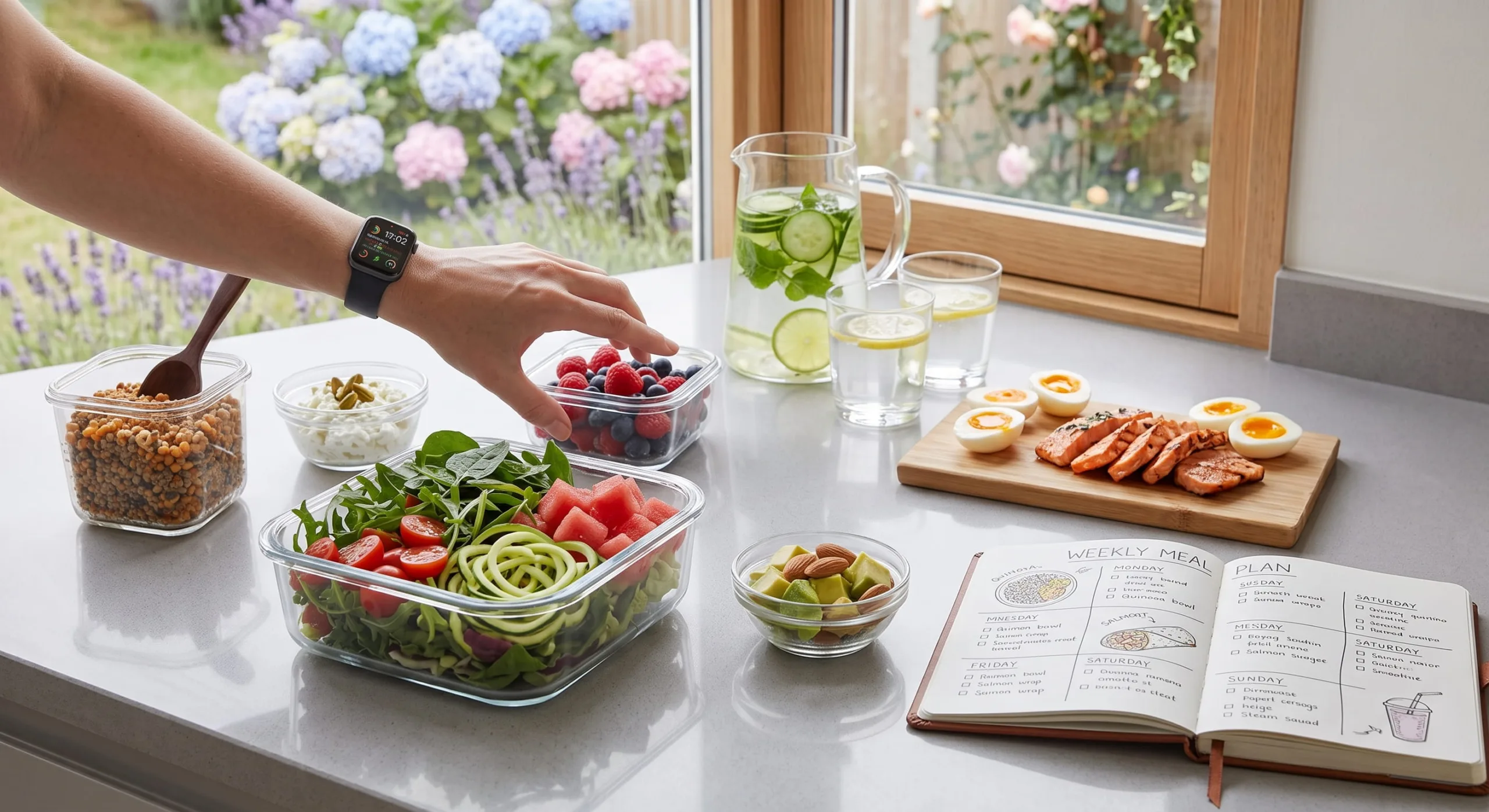
When you’re constantly hungry, it makes choosing the right foods at the right times really challenging. In fact, staying full and energized while eating fewer calories—that’s the “secret” to long-term fat loss success.
Here are 4 key strategies for feeling satisfied after a healthy meal and staying full longer. You’ll not only have a lot more energy, you’ll crave (and eat) less later. . .
1. Eat your water. Yes, eat. Drinking water is great, and you should throughout the day, but it doesn’t provide the same level of satiety as when you eat foods high in water.
There is a separate mechanism in the brain that controls hunger and thirst. If the food you eat contains water, it will stay in the stomach longer while it’s being digested.
PLUS, foods high in water are naturally very low in calories – making them ideal for fat loss.
Natural, whole foods have the highest water content. In fact, many fruits and vegetables contain 90 – 98 percent water! The following are some of the most hydrating foods. . .
2. Fill up on fiber. Fiber is critical to fat loss in several ways: first, high-fiber foods have what’s called “low-energy density,” meaning they have fewer calories relative to the total weight of the food.
Fiber contains only 1.5 to 2.5 calories per gram, while other carbs contain 4 calories per gram (fat contains 9 calories per gram). Essentially, you can pile your plate with plenty of high-fiber foods without worrying about caloric-overload.
In addition to being low-calorie, high-fiber foods are more filling. Fiber is absorbed by our bodies more slowly than other foods, which means we feel full longer.
Fiber also helps stabilize blood sugar levels. This makes the energy we get from eating last longer and helps prevents various cravings.
Foods high in fiber are fruits and vegetables , beans, lentils, legumes, and natural whole grains. Aim for at least 25-35 grams each day to help reduce your caloric intake and keep you feeling full and energized longer.
3. Include protein at every meal. A meal with carbs alone causes your insulin (blood sugar levels) to shoot up and then crash down. This leaves you feeling tired, hungry, and weak. It also gives your body an easy opportunity to convert and store that meal as fat.
The second reason protein should be included at every meal is because carbs are digested in about two hours, but proteins take considerably longer. So, when you eat a protein with carbs, the protein slows down the digestion of the carbs, which allows for energy to be released slowly.
Therefore, the benefits of eating protein at each and every meal are substantial. You’ll feel full sooner and stay full longer, your insulin levels will stay more consistent giving you lasting energy, and your metabolism will work more efficiently. Great protein sources are lean meats, fish, lowfat dairy, legumes, lentils, and unprocessed soy products.
Your choice of protein should be approximately the size of your palm. For example, a medium-sized chicken breast.
4. Don’t leave out healthy fat. Since fat is so calorie-dense, it’s important that you eat it in moderation . . . BUT if you go too low, you won’t enjoy the flavor or texture of your food, you won’t stay full for very long, and you’ll likely end up overeating later.
My favorite healthy fat source are nuts and seeds because they are also a great source of protein and fiber. Other excellent fat sources are avocados, olives, and fatty fish (e.g., salmon).
The fat source you choose should be about the size of your thumb. This is about 5 almonds for the averaged-sized woman or 7 almonds for the average man.
Putting this into Action
Now that you know which foods keep you feeling and satisfied throughout the day, here are some snack and meal ideas that combine them all together:
If you have any questions or concerns, please post them in the Comments section below and I’ll be happy to reply!