


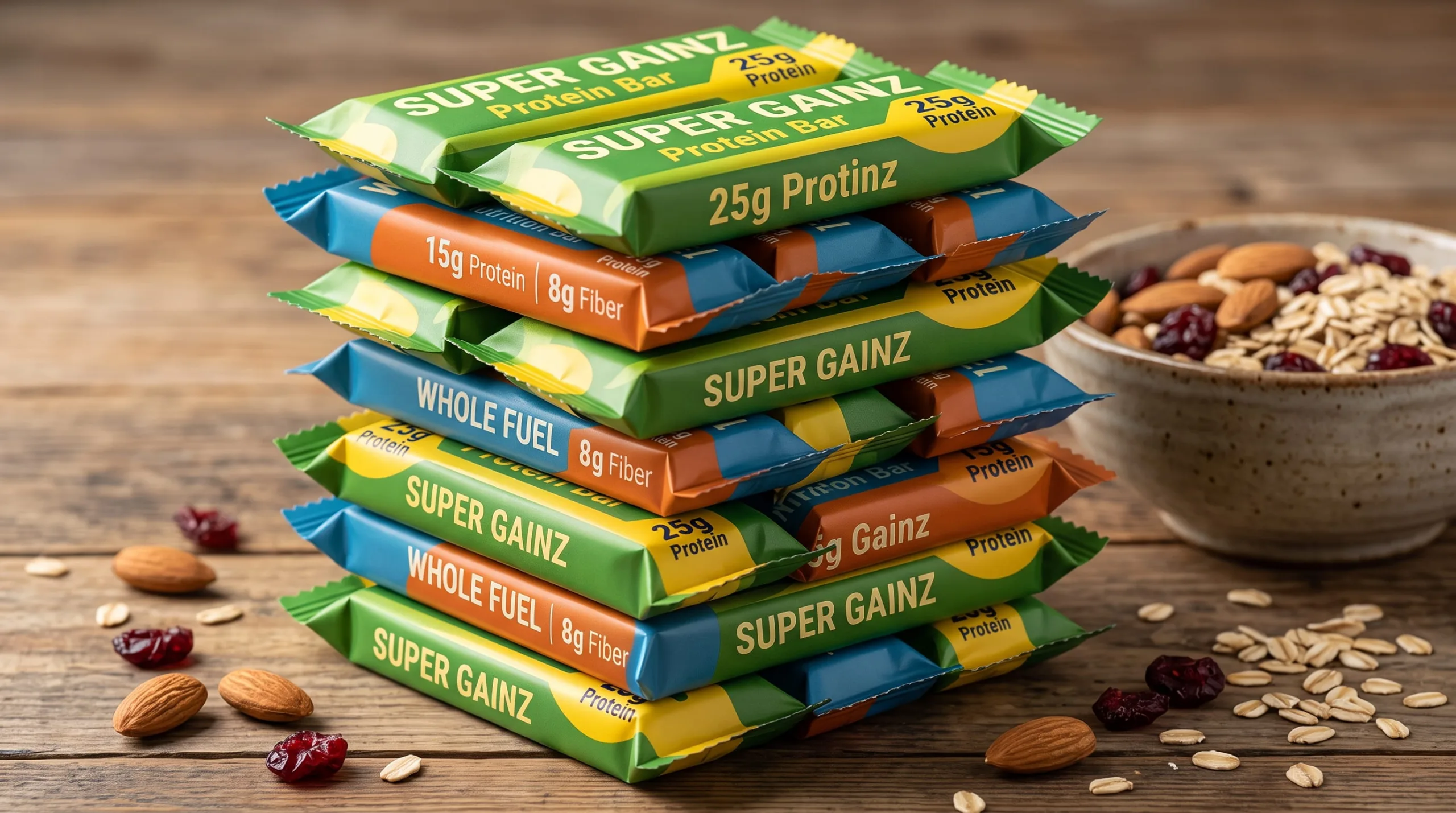
Protein bars are not only quick and easy, they’re helpful for losing fat… Right? Not so fast, don’t believe the hype. Many aren’t much better than a candy bar with a little bit of protein powder mixed in. Here’s what to look for (and what to avoid)…
Check The Sugar Content
When reading the labels, there are a few things you should watch out for in a protein or nutrition bar. First, check the sugar content. It should be less than 10 grams.
But don’t just look at the protein number on the “Nutrition Facts” panel. The grams of sugar doesn’t distinguish between sugars that are naturally occurring, such as in fruit, and those that are refined. You also need to look at the ingredients list.
FDA labeling laws require that all ingredients are listed in order of the quantity used. If refined sugars are the first or second ingredient, it’s not a good choice.
The most common refined sugars found in bars are: sucrose, corn syrup, high fructose corn syrup, and brown rice syrup.
A typical bar might list protein powder (such as whey isolate) as the first ingredient and corn syrup as the second ingredient. Don’t be surprised if some so-called “nutrition bars” list sugar or corn syrup as the first ingredient. Many bars that are still best sellers today are nothing more than ordinary candy bars with protein powder added in.
Check for trans fats and total fat content
The next thing to look for on a protein bar ingredients list is trans fatty acids, which usually show up in the form of hydrogenated or partially hydrogenated oils.
These trans fats extend the shelf-life of food products and virtually never spoil. Good for profits, not so good for you.
Check for fiber content
You want fiber to be at least 3 or 4 grams, ideally even more. Fiber actually expands in the stomach and is absorbed more slowly than other foods, which means we feel full and satisfied a lot longer – while taking in less calories, which is the perfect scenario for fat loss.
Fiber also helps stabilize blood sugar levels, which makes the energy you get from foods last much longer, so you’re staying energized throughout the day.
Check the calorie content
Most bars are pretty high in calories, yet without a lot of nutrient value. You could eat a large chicken breast, a baked potato, and a huge salad in less calories than many protein/nutrition bars that has very little nutritional value.
Think about how full and satisfied you feel after eating these bars. Are you loaded with energy or did all the sugar intensify your sweet-tooth and make you feel sluggish? Now compare that to how you feel after eating a baked sweet potato, grilled chicken breast, and some veggies. One will keep you hungry, malnourished, and struggling to lose weight, whereas the other will keep you satisfied, nourished, and on a much healthier path to permanent weight loss.
I’m not saying to avoid these bars completely, as it’s all about balance and moderation. But to say that these bars are helpful for losing weight, building muscle, and/or staying energized, just isn’t true.
Don’t let the marketing fool you into thinking you’re making a wise nutrition choice with these, when there are a lot healthier options that cost less, and if you do a little bit of planning, can be just as convenient.
I do understand, however, that these bars are quick, easy and convenient for taking on the go. Tomorrow I’ll share with you my home-made protein bar recipe, which is easy to make, costs less, and provides a lot greater nutrition in less calories.
I hope you found this helpful; please let me know if you have questions in the comments box below.